
ClearPoint Docs architecture
Use this diagram to understand where ClearPoint Docs sits between its readers, identity provider, documentation corpus, and canonical sources.
What this covers
This public view shows the system context needed to understand the portal without exposing restricted runtime or product detail.
How it works
ClearPoint Docs sits between canonical source repositories and human or agent readers. Source ownership remains outside the portal, while the portal validates and presents an approved projection for each audience.
Public readers, authenticated customers, internal staff, and machine clients enter through the Docs Portal. Supabase Auth establishes identity; the portal resolves platform grants and reads only the permitted rows from the shared docs corpus. Canon and product repositories feed a separate validation-and-publication path, so the portal is a publishing surface rather than a competing source of product truth. Public readers, authenticated customers, internal staff, and machine clients enter through the Docs Portal. Supabase Auth establishes identity; the portal resolves platform grants and reads only the permitted rows from the shared docs corpus. Canon and product repositories feed a separate validation-and-publication path, so the portal is a publishing surface rather than a competing source of product truth. Evidence status: Reflects the current portal, auth, corpus, and publication boundaries.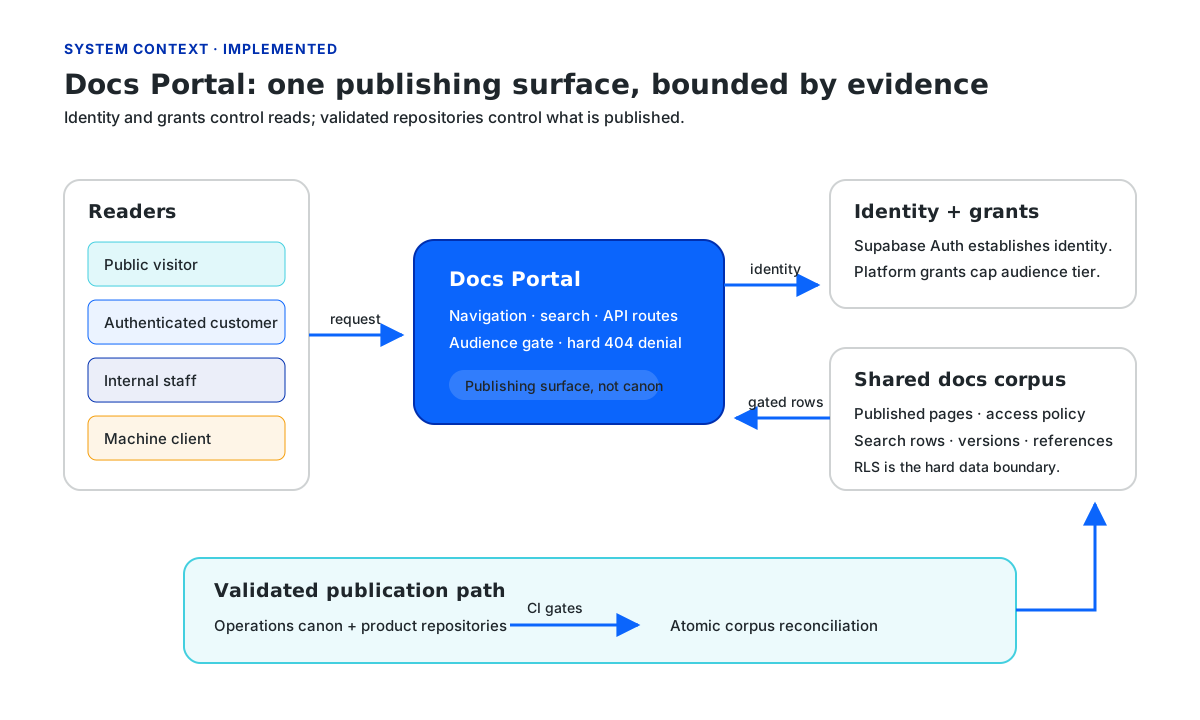
Read the diagram description
Limits
This public view stops at system boundaries. Runtime topology, access enforcement, data relationships, publication, and release operations are restricted to authorized readers. Product workflows and Academy flows publish in their own approved guides so an unapproved source package cannot become public through an architecture page.
Next steps
Read the ClearPoint Docs overview for the audience model or the security and trust technical companion for the public control boundary.
Related documentation
See also
Terms used on this page
Report a problem with this page
- Doc ID
cpl.docs.architecture- Source
docs/canonical/CPD-DOCS-CANONICAL.md#definition- Updated